What My Son's Tattoo Taught Me About Being a Real Father
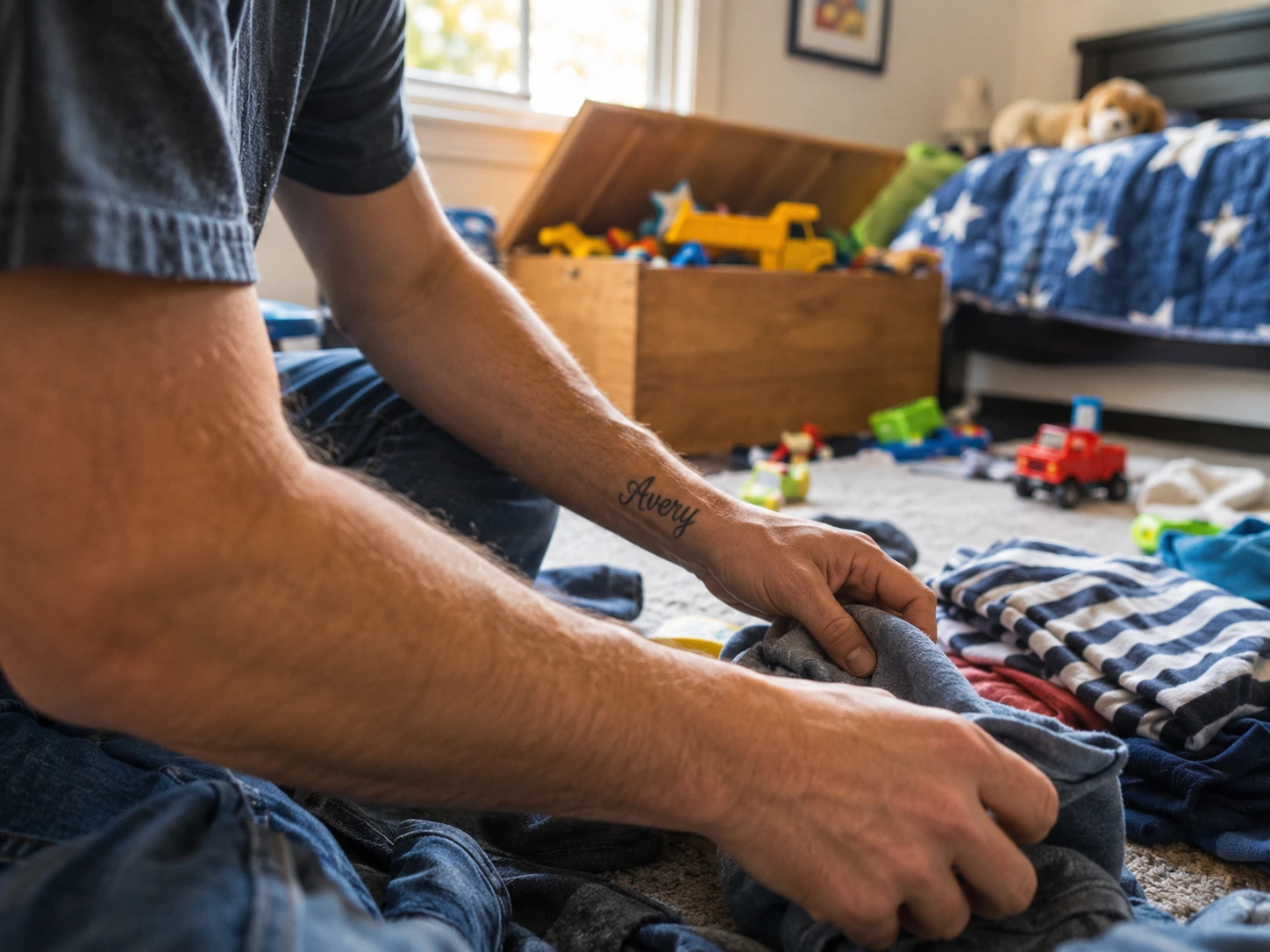
I remember taking bets on the day my son would be born, including one on his actual due date. Only a few nights after his birth, I went out, got incredibly drunk, drove in that condition, and had his name tattooed on my wrist.
In my mind, it was a declaration of love, something permanent that demonstrated how much my son meant to me. I could show anyone that tattoo, explain its significance, and feel an enormous sense of pride in being his father.
Meanwhile, his mother was at home recovering from childbirth and doing the actual caretaking.
It would be months before I changed a diaper, months before I stayed alone with him, and months before I fed him an entire bottle myself. It would be years before I began to understand what being a father required of me. I had permanently marked my body with my son's name before I had developed the willingness to take responsibility for his most basic needs.
What troubles me now is not whether I loved my son. I believe I did, even then. What troubles me is how easily I accepted my declaration of love as evidence that I was fulfilling my responsibilities.
I had confused the emotion of loving someone with the behavior of caring for them. For a long time, I didn't recognize the difference.
Confusing Pride with Participation
I am writing this as a letter of apology to my son, but also as an acknowledgment of the lack of compassion I showed his mother and the man I hoped he would one day become. I had expectations for his future long before I had begun taking responsibility for my own. I imagined the values I wanted him to possess, the decisions I hoped he would make, and the kind of person I wanted him to grow into. Yet I was doing very little to demonstrate those same values myself.
We often hear that becoming a parent changes a person. For some, the responsibility brings a sense of direction that may have been missing from their lives. But parenthood does not automatically correct our shortcomings. Sometimes it makes them considerably more apparent, particularly when the responsibilities of caring for another human being begin competing with habits we have spent years developing.
I was irresponsible, immature, and selfish. Those are not words I use to punish myself or invite sympathy. They are descriptions of behavior that I spent far too long excusing.
I wanted the freedom to continue living as I pleased while enjoying the recognition that came with being someone's father. I liked the identity, the pride, and the idea of having a son who carried a part of me into the future. What I failed to appreciate was that fatherhood would require me to surrender some of the behaviors I had come to regard as essential to who I was.
While I was figuring that out, his mother was already living the reality of parenthood. She did not have the luxury of treating responsibility as something she would eventually grow into. There were feedings, sleepless nights, exhaustion, and the physical recovery that follows childbirth. The time I spent avoiding those responsibilities did not make them disappear. It meant someone else had to assume them. My eventual growth does not compensate for what she endured.
Intention Is Not Execution
There is a peculiar arrogance in believing that our intentions should excuse our actions. I could tell myself that I loved my family and wanted what was best for them, but those statements did not change what was happening in our home.
My son needed a father who could be trusted to care for him, and his mother deserved a partner who understood that raising a child was a shared responsibility rather than an occasional act of participation.
It took considerable work, personal losses, and uncomfortable examinations of my behavior before I began understanding the difference. I had to confront aspects of myself that I had spent years rationalizing. Maturity was not something that arrived with age or with the birth of my children. It required acknowledging that certain parts of my character needed to change, regardless of how accustomed I had become to defending them.
Modeling Accountability
For a long time, I thought about the kind of man I hoped my son would become. I wanted him to be responsible, compassionate, dependable, and capable of making meaningful contributions to his family and society. But how could I reasonably expect those qualities from him while refusing to hold myself to the same standard?
Children may learn from the advice we give them, but they also observe how we treat other people and whether our promises bear any resemblance to our actions.
This is why I believe a father owes his children something more meaningful than lectures about right and wrong. He must be willing to acknowledge when he has been wrong himself. If I expect my son to take responsibility for his mistakes, I cannot spend my life defending mine. If I want him to apologize when he hurts someone, I must be willing to recognize the harm I have caused, even when admitting it threatens the image I would prefer him to have of me.
I do not want my son to believe that an apology is simply something we say to end an uncomfortable conversation. An apology means:
- Recognizing what we did
- Acknowledging who was affected
- Demonstrating through our behavior that we have taken those consequences seriously
It does not automatically entitle us to forgiveness, nor does it erase the experience of the person we hurt. As fathers, we should be particularly careful about expecting our children to practice accountability while refusing to demonstrate it ourselves.
What Love Demands
I am not writing this to ask my son to excuse the father I was, nor am I presenting myself as someone who has conquered every shortcoming. I still make mistakes, and there are parts of myself I continue trying to improve. I would rather he know the truth about my failures than inherit a carefully constructed image of a father who always knew what he was doing.
In retrospect, the tattoo on my wrist represents something very different from what I believed it did when I first got it. I once viewed it as proof of the love I had for my son, but today it reminds me of how little I understood about translating that love into action.
The ink was permanent from the moment it touched my skin. Becoming a father in any meaningful sense would take considerably longer, and it would demand far more of me than a few hours in a tattoo shop.
I cannot return to those early years and become the father or partner I should have been. I can acknowledge the harm my immaturity caused, continue changing the behaviors that contributed to it, and take seriously the responsibility I have today. I wanted my son to become a man who contributes something meaningful to himself, his family, and the world around him. It took me years to understand that if I wanted him to recognize what such a man looked like, I had to begin becoming one myself.
If he ever asks me why I had his name tattooed on my wrist before I had learned to change his diaper, I will tell him the truth:
I loved him, but I had not yet learned what that love required of me.
About the Author:
Randy Duran is a nonclinical mental health coach and the founder of Mental Mastery Consultancy. Drawing from his lived experiences with fatherhood, personal adversity, and emotional growth, he works with individuals and couples on emotional awareness, relationship patterns, and personal accountability.